Selling on Amazon.sa or Noon in 2026? Registration steps, fees, FBA vs FBN, ZATCA VAT and a per-order margin example for Saudi sellers. Start here.
Selling on Amazon.sa or Noon is a quick way to reach Saudi online shoppers without building all your own traffic first, because the marketplace brings visitors, checkout and often delivery. The price is commission on every order, less control and very little customer data. Our view: start on one marketplace with a small range, check the real margin per order, and build your own store once you know what sells.
In this chapter
Marketplace or your own online store
Amazon.sa and Noon side by side, with dated figures
Registration steps and documents
Listing products in Arabic and English
Fulfilment: FBA, FBN or shipping yourself
The full cost per order, and Saudi VAT basics
A worked SAR 115 order, including break-even ad spend
How to launch, and when to add your own store
Common mistakes and your checklist
How marketplaces work for a Saudi seller
A marketplace is one big website where many sellers list products. The customer pays the marketplace, it keeps its fees, and it pays you the rest on a schedule.
You still run the business. You pick products, set prices, keep stock accurate, answer customers and handle returns. The marketplace sets the rules, the search ranking and the checkout, including payment options such as mada cards.
Marketplace vs own e-commerce website for Saudi founders
Factor
Marketplace (Amazon.sa, Noon)
Own website (Shopify, WooCommerce, Magento)
Traffic
Built in. Shoppers already search there.
You bring visitors through ads, social media and SEO.
Control
Marketplace rules decide layout, ranking and policies.
You control design, pricing, offers and checkout.
Costs
Commission per sale, plus fulfilment and ads.
Subscription, payment fees, development and marketing.
Customer data
Very limited.
You own the customer list for email, WhatsApp and loyalty.
Brand building
Hard. You sit next to similar products.
Strong. Your brand is the whole experience.
Speed to first sale
Fast once approved.
Slower, depends on marketing.
Amazon.sa vs Noon: commission, fees, fulfilment and payouts
Both marketplaces work in Arabic and English, and both have mobile apps, which matters for mobile-first Saudi shoppers. The table shows what we could confirm from official seller pages as of November 2026.
For Noon, we could not verify current Saudi fees or onboarding rules from an official public source for this edition. We have not filled those cells with guesses. Use the “Ask Noon before you sign up” list below instead.
Point (as of November 2026)
Amazon.sa
Noon Saudi
Source
Onboarding documents
Saudi commercial registration required. Business and contact details, phone number, chargeable card and tax information may be requested.
Individual plan: USD 0.99 per unit sold (about SAR 3.71). Professional plan: USD 39.99 per month (about SAR 149.96). Promotions may change the subscription charge.
USD to SAR uses the fixed peg of SAR 3.75 per dollar. Treat every fee here as a dated snapshot, not a fixed price.
Ask Noon before you sign up
Ask Noon’s seller team these questions in writing, and keep the reply with the date:
Which documents do you need from a Saudi company, and from a foreign brand?
What is the commission for my exact category, and is it charged on the VAT-inclusive price?
Are there monthly, listing or closing fees?
What are FBN fees per unit for my product size and weight, and monthly storage fees?
How often are payouts made, and is any amount held back for returns?
Who pays return shipping, and how are damaged returns handled?
Does my category need approval or certificates before listing?
Is there a new seller promotion, and when does it end?
How to compare Amazon.sa vs Noon fees fairly
Do not compare headline commission alone. Work out the total cost for one real product on each platform: commission, fulfilment, storage, likely ads and returns. A lower commission can still cost more if fulfilment fees are higher for your product size.
Other Saudi marketplaces
Other marketplaces and category sites operate in Saudi Arabia. We could not verify their seller terms from official sources for this edition, so use the same question list above for any of them. Note that Salla and Zid are store builders for your own shop, not marketplaces.
How to start selling on Amazon.sa: registration steps
The route depends on whether you are a Saudi-registered business or a foreign brand. The steps below follow the Amazon.sa seller guide as of November 2026.
Get your commercial registration (CR). Amazon.sa says a Saudi CR is required to register and sell. You apply through business.sa. See the Company registration chapter.
Prepare your documents. Business details, contact details, a phone number, a chargeable card and tax information such as your VAT number if you have one. Add your National Address and a Saudi bank account for payouts.
Choose a plan. Individual (per unit) or Professional (monthly). Compare using your expected monthly units.
Complete identity and business verification. Follow the steps Seller Central shows you. Make sure the name on your ID, CR and bank account match, because mismatches delay approval.
Request category approval if needed. Amazon describes category approval in its seller guide.
List products and choose fulfilment. Covered in the next sections.
What if you do not have a CR?
Amazon’s guide states a CR is required, and we found no official no-CR route on its pages. If you hold a freelance document or another licence, ask Amazon’s seller support directly whether it is accepted before you pay for anything.
Foreign brands
Foreign brands usually sell through a Saudi entity, a licensed distributor or a local partner who holds the CR. Check MISA guidance on misa.gov.sa, confirm with a licensed adviser, and see the Foreign brands chapter.
Product approvals in Saudi Arabia
Food, cosmetics, supplements and medical items may need SFDA registration, and some electronics need conformity certificates. Check sfda.gov.sa before you buy stock.
Listing products in Arabic and English
Arabic titles. Write natural Arabic, not machine translation. Include brand, product type, size and key feature.
Bullet points. Answer real questions: size, material, warranty, what is in the box.
Price including VAT. Build the price from your costs, using the worked example below.
Stock accuracy. Overselling causes cancellations, which hurt your account health.
Plan early for Ramadan, Eid al-Fitr, Eid al-Adha, Saudi National Day and White Friday, as warehouses get busy before these peaks.
Fulfilment: FBA Saudi Arabia vs FBN Noon vs shipping yourself
Marketplace fulfilment (FBA or FBN)
You send stock to the marketplace warehouse, and it picks, packs, delivers and handles returns. You pay fulfilment fees per unit and storage fees, so slow stock gets expensive.
Seller fulfilment
You store stock and ship with a courier such as SPL (Saudi Post), Aramex or SMSA. You control packaging, but must meet the marketplace’s delivery rules and deliver to the customer’s National Address. See the Shipping chapter.
Situation
Better choice
Small, fast-selling items
Marketplace fulfilment
Large or heavy items
Often seller fulfilment (compare storage fees)
Premium or gift packaging matters
Seller fulfilment
No warehouse or staff
Marketplace fulfilment
Testing unknown demand
A small batch in marketplace fulfilment
The full cost of selling on Amazon.sa and Noon
Cost
What it is
Source
Plan fee
Amazon.sa: USD 39.99/month or USD 0.99 per unit (as of November 2026)
Collected from the customer, paid to ZATCA if registered
ZATCA (see next section)
Saudi VAT basics and ZATCA marketplace VAT compliance
This explains the rules in general terms. It is not tax advice. Confirm your position with ZATCA (zatca.gov.sa) and a licensed adviser.
Standard rate. ZATCA applies VAT at 15% on most goods.
Mandatory registration. Under ZATCA’s VAT rules, a Saudi resident must register when taxable supplies exceed SAR 375,000 over the past 12 months, or are expected to in the next 12 months. Amazon’s Saudi Arabia VAT FAQs repeat the same figure as of November 2026.
Below the threshold. Between SAR 187,500 and SAR 375,000 you may register voluntarily. Below SAR 187,500 you generally cannot register, so you do not charge VAT, but you also cannot reclaim VAT on marketplace fees.
Non-resident sellers. Amazon’s Saudi Arabia tax policies say non-resident sellers using FBA must register from their first Saudi sale. Confirm with ZATCA.
FATOORAH. This is ZATCA’s e-invoicing system: registered businesses must issue invoices electronically in the approved format.
Count sales from every channel together when checking the threshold. See the VAT and ZATCA chapter for the full detail.
Amazon.sa seller fees and VAT calculation: a worked example
Contribution margin is what one order leaves after variable costs. It pays rent, salaries and profit. We use one formula:
All numbers are an illustration (estimate), not real Amazon or Noon rates. We assume the seller is VAT-registered, so fees are shown excluding VAT (the VAT on fees is reclaimed), and the commission is charged on the VAT-inclusive price. Check how your rate card applies it.
Line
Applies to
SAR
Price excluding VAT
–
100.00
VAT at 15%
On SAR 100
15.00
Customer pays
–
115.00
VAT passed to ZATCA
–
-15.00
Commission (assumed 15%)
On SAR 115
-17.25
Fulfilment fee (assumed)
Per unit
-12.00
Product cost
Per unit
-40.00
Inbound shipping
Per unit
-3.00
Packaging
Per unit
-2.00
Returns allowance
Per order
-3.00
Contribution before ads
–
22.75
Ads per order: SAR 8
–
14.75
Ads per order: SAR 12
–
10.75
Ads per order: SAR 25
–
-2.25
At SAR 12 of ads per order, the product still makes SAR 10.75. Break-even ad spend is SAR 22.75 per order: above that, every sale loses money. Run this in Google Sheets, Excel, Zoho Books, Qoyod or Odoo for each product before you buy stock.
How to start selling on Amazon.sa and Noon
Pick one marketplace. Learn one set of rules before adding a second.
Choose a small range. Only products with a positive contribution after realistic ads.
Prepare listings and approvals. Certificates first, then stock.
Send a small batch. Avoid storage fees on unproven items.
Run small ads. Track cost per order against your break-even ad spend.
Review weekly. Sales, returns, reviews, stock and real margin.
Expand. Keep winners, cut losers, then add the second marketplace.
When to launch a Shopify store in Saudi Arabia alongside marketplaces
A marketplace does not replace your own brand website. It gives reach; your store keeps customer data and loyalty.
When a marketplace alone is enough
You are still testing demand
You sell commodity items where brand matters little
You have no budget yet for your own marketing
Signs you are ready for your own store
Customers search for your brand name on Google, Instagram or X
Commission takes a large share of your contribution
You want repeat buyers through email, WhatsApp or loyalty points
You run Ramadan and Eid campaigns and want to keep those customers
Shopify, WooCommerce and Magento integration with marketplaces is possible through connectors or an ERP such as Odoo, so stock stays in sync and you avoid overselling. For platform choice, see the Choosing your platform chapter and our guide to Shopify store development.
Common mistakes when selling on Amazon.sa and Noon
Pricing from competitors, not costs. You sell a lot and lose money per order.
Machine-translated Arabic. Lower trust and fewer Arabic search matches.
Too much stock first time. Storage fees and cash tied up.
Ignoring the VAT threshold. Possible ZATCA penalties.
Treating fees as fixed. Margins shrink when a promotion ends.
No own customer channel. If your account is suspended, sales stop.
Your checklist for this step
I have a Saudi CR, or a local partner arrangement for my foreign brand
I chose one marketplace to start with
I sent the “Ask Noon” questions and saved the dated reply
I checked category approvals and SFDA or conformity needs
I wrote listings in natural Arabic and English
I calculated contribution and break-even ad spend for every product
I chose fulfilment per product
I checked my VAT position with ZATCA or a licensed adviser
I planned stock for Ramadan, Eid and White Friday
How Redrock can help
When you are ready to grow beyond marketplaces, Redrock’s e-commerce development team builds stores on Shopify, Salla, Zid, WooCommerce, Magento / Adobe Commerce and custom Laravel. We can connect your store to Odoo ERP so stock and orders stay in sync with Amazon.sa and Noon.
Next chapter: Marketing your online store in Saudi Arabia
FAQ
Do I need a commercial registration to sell on Amazon.sa?
Yes. Amazon.sa's seller guide says a Saudi commercial registration is required to register and sell, as of November 2026. Foreign brands usually work through a Saudi entity or local partner. Confirm your structure with a licensed adviser.
What does Amazon.sa charge sellers?
As of November 2026, Amazon.sa lists an Individual plan at USD 0.99 per unit sold and a Professional plan at USD 39.99 per month (about SAR 150), plus category referral fees, fulfilment and optional ads. Promotions can change these, so check the live page.
What are Noon Saudi seller commission rates in 2026?
We could not verify Noon's current Saudi rates from an official public source as of November 2026. Ask Noon in writing for your category's commission, FBN and storage fees, payout timing and return rules, then compare total cost per order.
When do marketplace sellers need to register for VAT in Saudi Arabia?
Under ZATCA's rules, Saudi residents must register when taxable supplies exceed SAR 375,000 in 12 months, with voluntary registration from SAR 187,500. Amazon says non-resident FBA sellers register from their first sale. Confirm with ZATCA or a licensed adviser.
How do I work out break-even ad spend per order?
Take the price excluding VAT and subtract commission, fulfilment, product cost, inbound shipping, packaging and returns. What is left is your break-even ad spend. In our SAR 115 example, that is SAR 22.75 per order.
Is FBA or FBN better than shipping orders myself?
Marketplace fulfilment suits small, fast-selling items and sellers without a warehouse. Shipping yourself with SPL, Aramex or SMSA suits large items or premium packaging. Compare fulfilment and storage fees for your actual product size.
Prajosh is our senior e-commerce consultant at REDROCK Technologies, a premier e-commerce development agency. He has over 15+ years of experience in developing and implementing e-commerce solutions using Magento, Shopify and WooCommerce. He spends his time understanding different business challenges and providing technology solutions to increase efficiency and effectiveness.
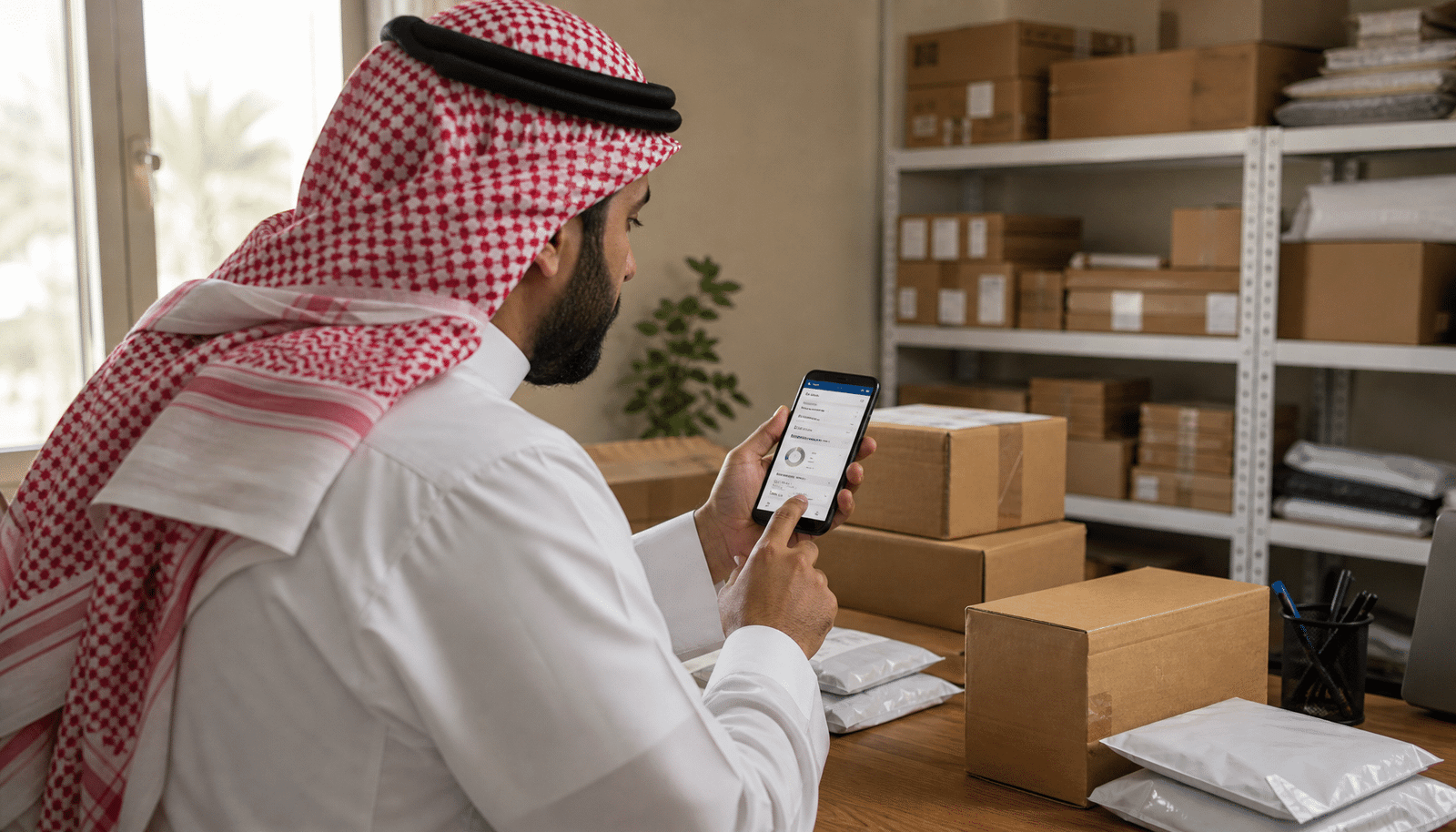
Use this ecommerce launch checklist Saudi founders need in 2026: ZATCA VAT checks, live mada tests, real test orders, National Address and launch monitoring.
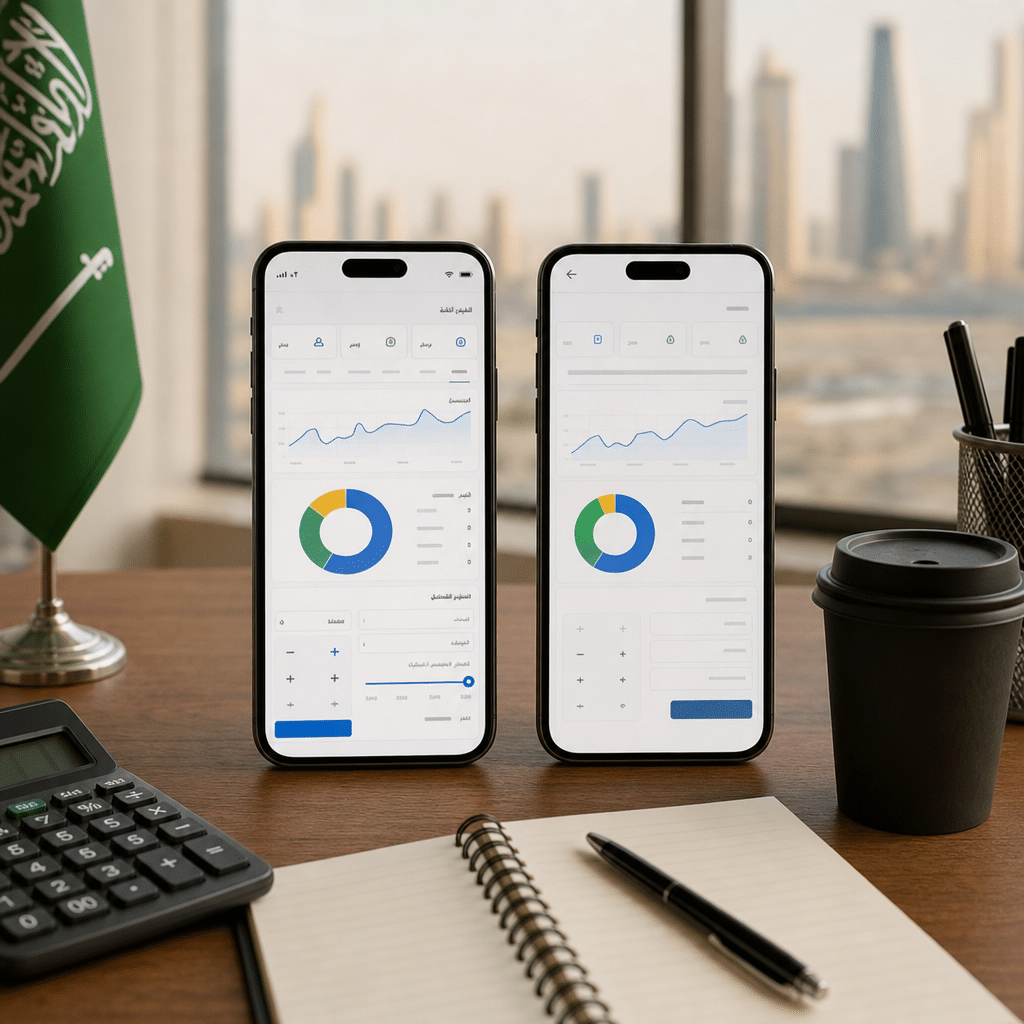
How to grow an ecommerce store in Saudi Arabia after launch: a weekly routine, mada checkout checks, key metrics, a SAR margin example and Ramadan planning.





 Ecommerce Launch Checklist Saudi Arabia: 2026 Go-Live Guide
 Ecommerce Feasibility Study Saudi: Real Costs (2026)
 How to Grow Your E-Commerce Store in Saudi Arabia (2026)