



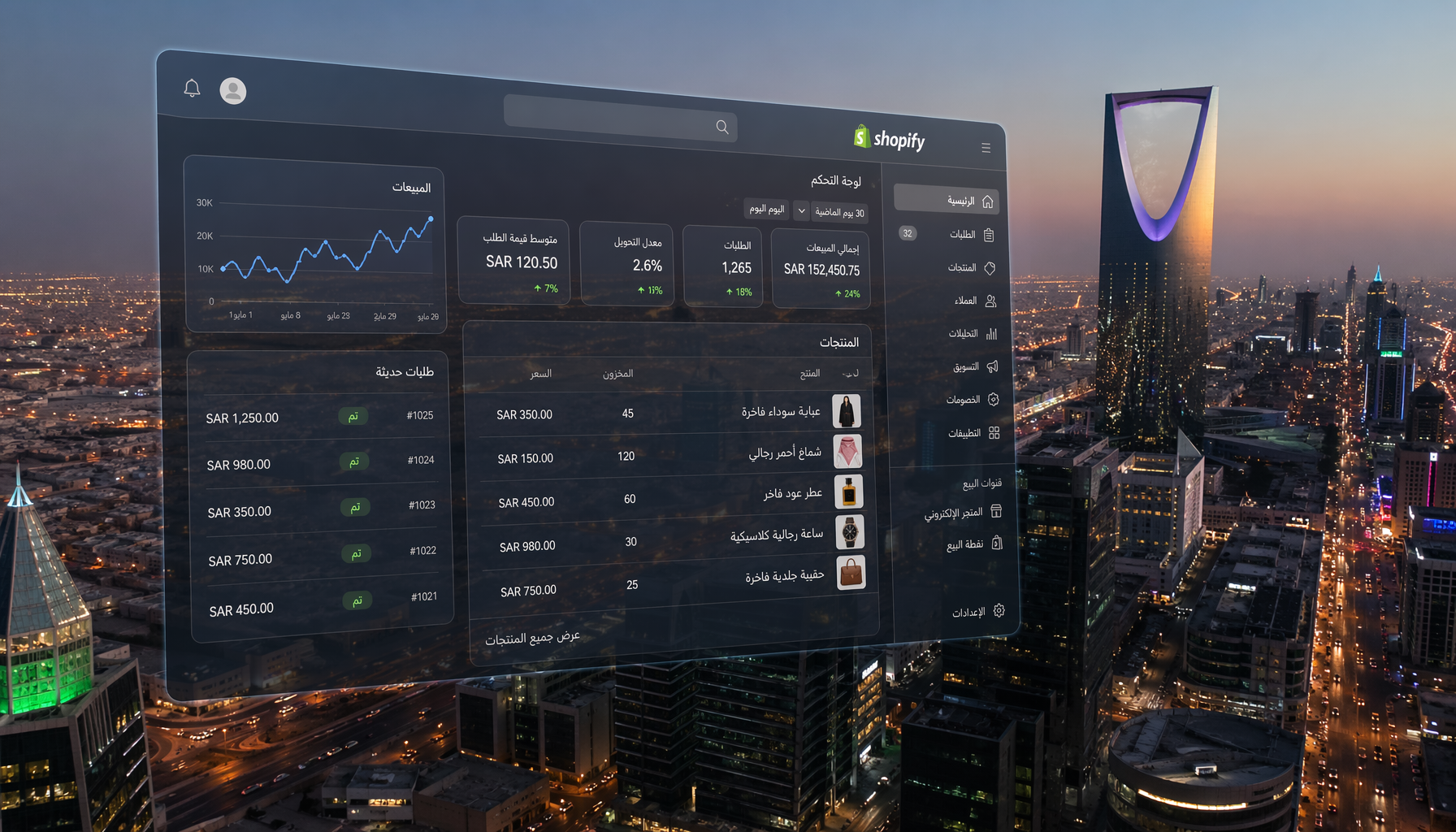
Shopify app development in Saudi Arabia has shifted from a nice-to-have to a genuine growth lever. With the KSA e-commerce market valued at USD 16.1 billion in 2024 and forecast to hit USD 41.3 billion by 2032 at a 12.5% CAGR, more Saudi merchants are discovering that off-the-shelf Shopify apps cannot keep up with local payment rails, Arabic UX requirements, or ZATCA e-invoicing mandates. A custom Shopify app fills those gaps precisely.
This guide is written for Saudi business owners, marketing managers, and founders who want a clear picture of what custom Shopify app development involves, what it costs in SAR, and how to pick the right development partner. I have structured it so you can read it end-to-end or jump to the section that matters most right now.
By the time you finish reading, you will know the development process step by step, the technologies involved, realistic SAR pricing tiers, ZATCA compliance requirements, and exactly what questions to ask a Shopify app development company before signing a contract.
Why Saudi Merchants Need Custom Shopify App Development
Saudi Arabia’s digital economy is growing faster than most generic Shopify apps can adapt to. GMI Research data shows internet penetration reached 98.6% in 2022, and electronic payments accounted for 85% of total retail payments in 2025, up from 79% in 2024, with 14.6 billion electronic transactions processed that year. Over 41,000 e-commerce businesses were registered by the end of 2024, a 10% year-on-year increase.
The problem is not a lack of shoppers. The problem is that most global Shopify apps were not built with Saudi Arabia in mind. They lack Mada card support, they display dates in Gregorian format only, and they have no concept of prayer-time store closures or Iqama-based loyalty programs.
Custom Shopify app development solves these gaps directly. A custom Shopify app is software built specifically for your store, integrated through Shopify’s official APIs, and designed around your business logic rather than a generic template.
Where Generic Apps Fall Short in KSA
- Payment integrations: Mada, STC Pay, Apple Pay, and Tabby (BNPL) require local API configurations that most global apps do not support out of the box.
- Arabic RTL layouts: Shopify’s theme system supports Arabic, but custom logic such as dynamic product descriptions, loyalty point labels, or checkout upsells often breaks in RTL without dedicated development.
- Hijri calendar support: A Riyadh-based fashion retailer running a Ramadan campaign needs promotional countdown timers that respect the Hijri date system, not just the Gregorian calendar.
- Prayer-time windows: A Jeddah restaurant or electronics store may want to automatically pause ads or display a “Back soon” banner during prayer times, a feature no off-the-shelf app handles reliably.
- Iqama-based loyalty: Loyalty programs tied to Saudi National ID or Iqama number require custom verification logic that generic reward apps cannot provide.
- ZATCA e-invoicing: Phase 2 mandates real-time integration with the ZATCA Fatoora platform. This requires a custom Shopify app or plugin specifically built around the ZATCA API.

Shopify App Development Cost in Saudi Arabia: SAR Pricing Tiers
One of the most common questions I hear from Saudi merchants is: “What does a custom Shopify app actually cost?” The answer depends on complexity, the number of third-party integrations, and whether you need ongoing maintenance. Below is a realistic pricing table based on current market rates for Shopify app development services in the KSA region.
SAR Cost Breakdown by App Type
- Theme App Extension (simple UI customization or widget): SAR 5,000 – SAR 15,000. Examples include a prayer-time banner, a Hijri date badge on product pages, or a custom homepage slider with Arabic copy fields. Timeline: 1-3 weeks.
- Private Custom App (single-store, internal tool): SAR 20,000 – SAR 60,000. Examples include a ZATCA e-invoicing connector, a Mada/STC Pay payment integration, or a custom Iqama loyalty engine. Timeline: 4-10 weeks.
- Public Shopify App (listed in the App Store, multi-merchant): SAR 80,000 and above. Examples include a BNPL widget that works across multiple Saudi merchants, or a multi-location inventory tool built for Shopify Plus. Timeline: 3-6 months.
- Shopify Mobile App (PWA or native via React Native/Flutter): SAR 35,000 – SAR 90,000 depending on features. A mobile app for a Riyadh-based fashion brand with push notifications, Arabic RTL UI, and Apple Pay integration sits at the higher end.
Ongoing Maintenance Retainers
Custom apps are not a one-time expense. Shopify releases API updates regularly, and ZATCA compliance requirements evolve. Most Saudi merchants budget a monthly maintenance retainer of SAR 2,500 – SAR 8,000 depending on app complexity. This covers bug fixes, API version upgrades, performance monitoring, and minor feature additions.
A Shopify Plus developer working on enterprise-level apps for large KSA retailers may charge a higher retainer, typically SAR 10,000 – SAR 20,000 per month, given the complexity of multi-store configurations and custom checkout extensions.
Pro tip: Always ask your Shopify app development agency to quote maintenance separately from build cost. Agencies that bundle everything into one number often reduce support quality after launch.
ZATCA E-Invoicing Compliance: What Every Saudi Shopify Store Must Know
ZATCA (Zakat, Tax and Customs Authority) e-invoicing, locally known as Fatoora, is the single highest-stakes compliance requirement for Saudi e-commerce stores. Non-compliance carries SAR 5,000 to SAR 50,000 in penalties per violation, and repeat offences can trigger store suspension. Any custom Shopify app that handles transactions must be built with Fatoora integration from day one.
Phase 1 vs Phase 2: What Changed
- Phase 1 (Generation Phase – December 2021): All VAT-registered businesses must generate e-invoices and credit/debit notes in a ZATCA-compliant XML or PDF/A-3 format. This applies to all transactions, including Shopify orders.
- Phase 2 (Integration Phase – rolled out by turnover band from January 2023 onward): Businesses must integrate their invoicing system directly with the ZATCA Fatoora platform in real time. Each invoice is cryptographically stamped and reported to ZATCA within seconds of issuance.
- Turnover threshold for Phase 2: ZATCA has been rolling out Phase 2 in waves. The first wave targeted businesses with annual revenue above SAR 3 billion. Subsequent waves have brought the threshold down progressively. As of 2025, businesses with annual revenue above SAR 5 million are expected to be integrated. Check your current obligation at zatca.gov.sa.
What This Means for Your Shopify App
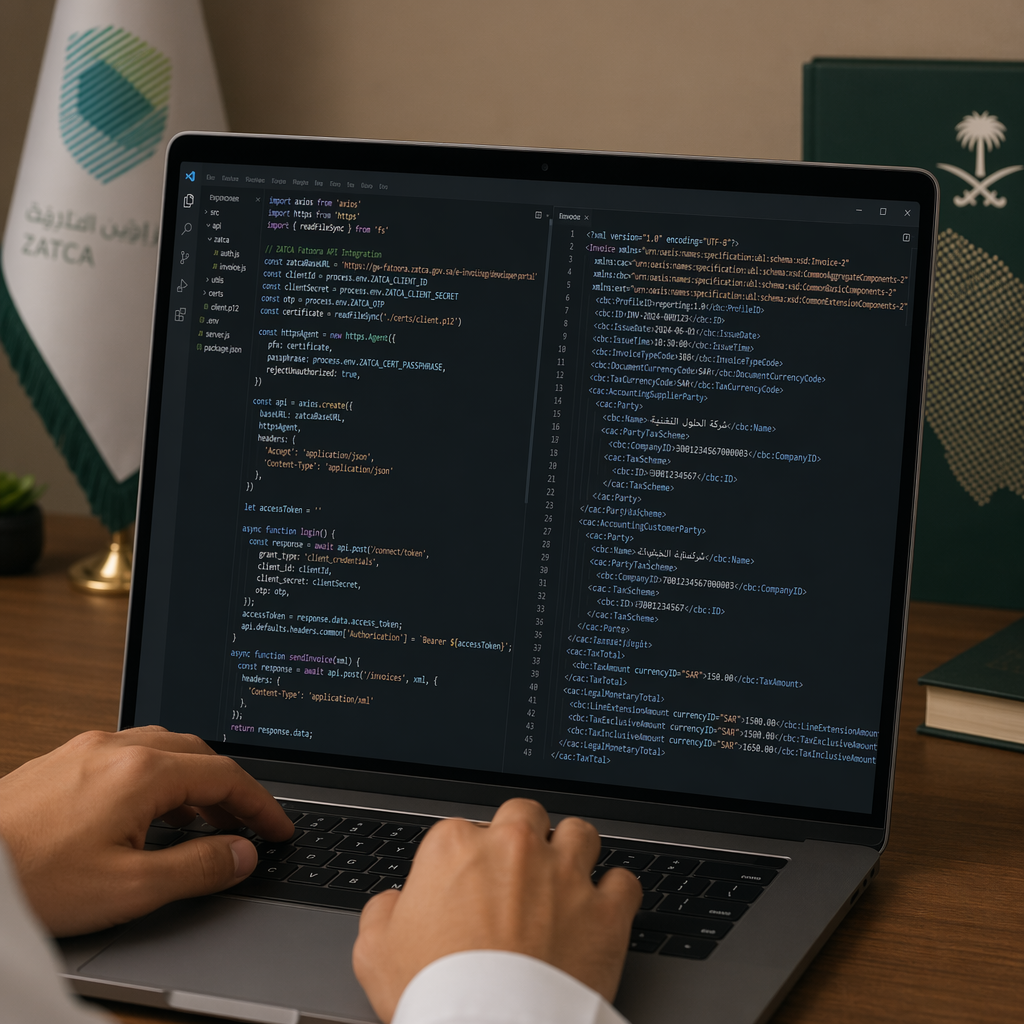
A standard Shopify store does not generate ZATCA-compliant invoices automatically. You need either a custom Shopify private app or a ZATCA-certified third-party integration that intercepts each order, formats the invoice to ZATCA XML standards, submits it to the Fatoora API, and stores the cryptographic hash for audit purposes.
Building this correctly requires a developer who understands both the Shopify Admin API and the ZATCA Fatoora API. This is not a weekend project. Budget SAR 20,000 – SAR 40,000 for a production-ready ZATCA integration, plus an ongoing retainer for API updates as ZATCA releases new compliance waves.
Step-by-Step: How to Build a Shopify App for Your Saudi Store
Whether you are working with a Shopify app development agency or managing an in-house team, understanding the development process helps you ask better questions, set realistic timelines, and avoid costly scope creep. Here is the process I have seen work well for KSA merchants.
Step 1: Define the Problem Your App Must Solve
Start with a one-paragraph problem statement. “Our Shopify store does not generate ZATCA-compliant invoices and we are manually issuing PDFs after every sale, which takes 2 hours per day and creates audit risk” is a clear brief. “We want a better app” is not.
List the specific features, the user roles who will interact with the app (merchant admin, customer, warehouse staff), and any third-party systems it must connect to (Mada gateway, Saudi Post, ERP software).
Step 2: Choose Your App Type
Shopify supports several app types, and choosing the wrong one creates technical debt later.
- Shopify Public App: Listed in the Shopify App Store, can be installed by any merchant. Requires Shopify Partner review and OAuth authentication. Best for agencies building a product for the wider KSA market.
- Shopify Private App (now called Custom Apps in Shopify Admin): Built for a single store, installed via a direct link, no App Store listing required. Best for bespoke integrations like ZATCA, ERP, or warehouse management. This is the most common type for Saudi business owners.
- Shopify Theme App Extension: Extends the store’s theme with new UI blocks (banners, widgets, product badges) without touching theme code. Best for lightweight UI features like prayer-time notices or Hijri date displays.
- Shopify POS App: A custom app for the Shopify POS system, useful for Saudi retailers with physical stores in malls like Mall of Arabia or Kingdom Centre who need custom checkout flows or loyalty integrations at the point of sale.
Step 3: Set Up Your Shopify Partner Account and Development Store
Go to partners.shopify.com and create a free Shopify Partner account. This gives you access to unlimited development stores, the app creation dashboard, and API credentials. Your development store replicates your live store environment without affecting real orders.
Step 4: Choose Your Technology Stack
See the full technology breakdown in the next section. In short, most Saudi Shopify apps are built using Node.js with React on the front end, or PHP/Laravel for teams with existing backend infrastructure.
Step 5: Build, Test, and Deploy
Development follows a standard sprint cycle: build a feature, test it against the Shopify development store, fix bugs, then push to staging. For ZATCA integrations, add a compliance testing phase where invoices are validated against the ZATCA sandbox environment before going live. Saudi Post (SPL) integrations similarly have a sandbox API for testing shipment label generation.
Deployment involves hosting your app backend (typically on AWS Bahrain region or a GCC-based cloud provider for data residency), connecting it to your live Shopify store via API keys, and running a final smoke test on real orders.
Technologies Used in Custom Shopify App Development
Understanding the technology behind your app helps you evaluate developer proposals and avoid being oversold. Here is what a competent Shopify app development company typically uses.
Backend Technologies
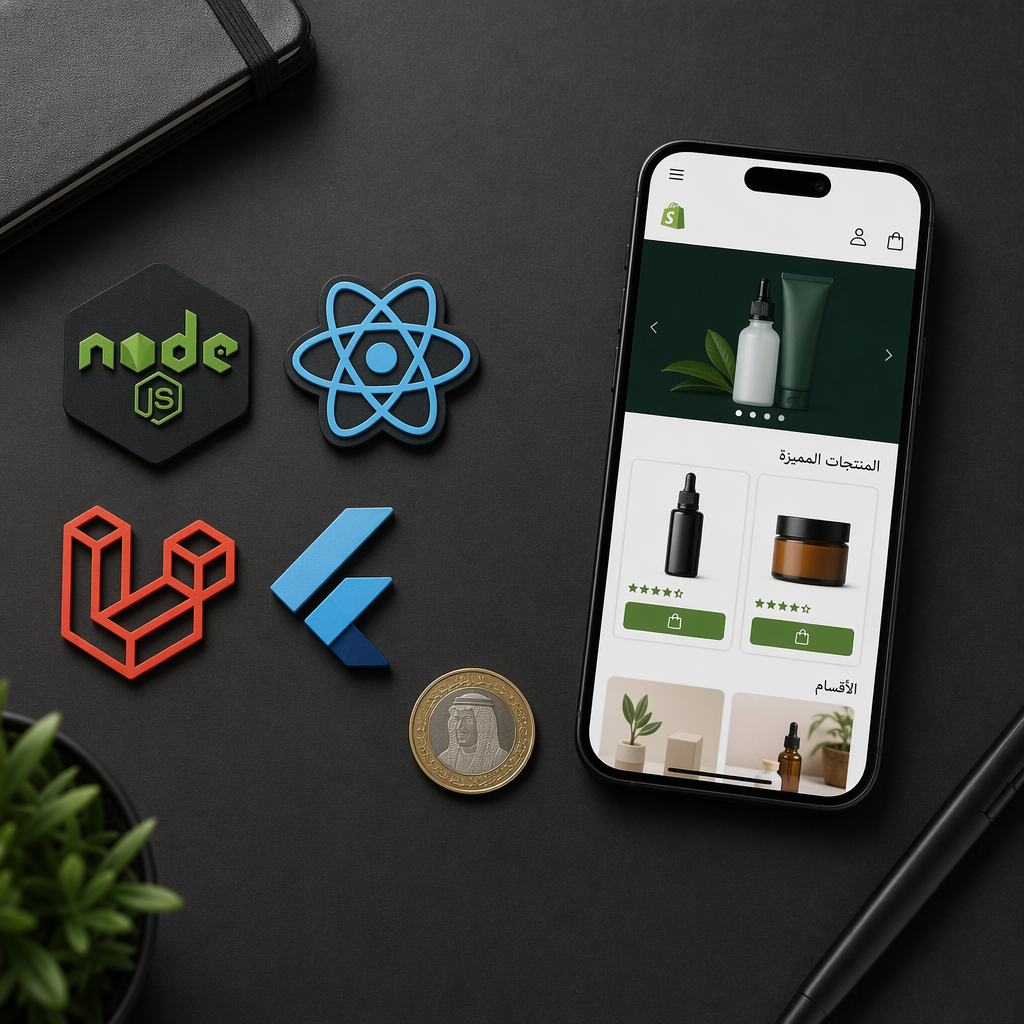
- Shopify app development with Node.js: The most widely used backend for Shopify apps. Node.js handles Shopify’s webhook events efficiently, scales well, and has first-class support in Shopify’s official CLI and starter templates. Ideal for real-time features like live inventory sync or payment confirmations.
- Shopify app development with PHP / Laravel: Laravel is popular among KSA development agencies with existing PHP teams. It integrates cleanly with the Shopify API via community packages, and its elegant ORM makes database-heavy apps (ERP sync, order management) straightforward to build and maintain.
- Shopify app development with Python: Python is less common for Shopify apps but works well for data-intensive tasks like sales analytics dashboards, demand forecasting tools, or AI-powered product recommendation engines. Frameworks like Django or FastAPI handle the API layer.
Frontend Technologies
- Shopify app development with React: React is the standard for Shopify’s embedded app UI. Shopify’s own Polaris design system is React-based, meaning your app’s admin interface will look and feel native to the Shopify dashboard. Most serious custom Shopify app development uses React for the frontend.
- Build a Shopify app with Node and React: The combination of a Node.js backend and a React frontend is Shopify’s recommended full-stack approach. Shopify’s official app template (using Remix) is built on this stack. For Saudi merchants, this stack also makes it easier to hire developers, as Node/React skills are common in the KSA tech market.
- Build a Shopify app with Laravel: A Laravel backend paired with a React or Vue.js frontend is a strong alternative, especially for agencies already managing Shopify + WooCommerce or Shopify + Magento projects for the same client.
Mobile App Technologies
- React Native Shopify app: React Native allows a single codebase to produce both iOS and Android apps. It connects to your Shopify store via the Storefront API, delivering a native mobile shopping experience. A React Native app for a Riyadh clothing brand can include Arabic RTL support, push notifications for order updates, and Apple Pay/STC Pay at checkout.
- Flutter Shopify app: Flutter, built by Google, is an alternative to React Native with strong performance on both platforms. Some KSA development teams prefer Flutter for its consistent UI rendering across iOS and Android, particularly for visually rich fashion or lifestyle brands.
- Shopify PWA (Progressive Web App): A PWA sits between a mobile website and a native app. It runs in the browser but can be installed on a home screen, sends push notifications, and works offline. For merchants who want a mobile app experience without the App Store approval process or the cost of native development, a Shopify PWA is a practical middle ground. Budget SAR 20,000 – SAR 40,000 for a well-built Shopify PWA.
KSA-Specific Features Worth Building Into Your Shopify App
This is where Shopify custom app development genuinely pays off. Saudi-specific features are rarely available in global apps, but they have a measurable impact on conversion and customer retention in this market.
Local Payment Gateway Integration
Mada is the dominant debit card network in Saudi Arabia, processing billions of transactions annually. STC Pay has a large active user base, particularly among younger Saudi consumers. Tabby and Tamara offer BNPL (buy now, pay later) options that are increasingly expected at checkout. None of these integrations work correctly without custom app development or a locally configured payment plugin.
A custom Shopify payment extension connects your store to these gateways through SAMA-regulated APIs, handles SAR currency formatting, and manages the redirect flows that each provider requires. For stores doing more than SAR 500,000 per month in revenue, a custom payment integration typically recovers its development cost within 60-90 days through reduced cart abandonment.
Arabic Language and RTL Support
Shopify supports Arabic natively at the theme level, but dynamic content generated by apps (upsell pop-ups, loyalty notifications, chatbot messages) often defaults to LTR layout. A properly built custom app sets RTL directionality at the component level, uses Arabic-first font stacks, and formats numbers according to Saudi convention (e.g., SAR 1,500 rather than 1500 SAR).
Saudi Post (SPL) and Last-Mile Delivery Integration
Saudi Post (SPL) is the primary logistics partner for many KSA e-commerce businesses, particularly for deliveries outside Riyadh and Jeddah. A custom Shopify app can automate shipment label creation, track parcel status via the SPL API, and trigger customer SMS notifications in Arabic when a package reaches its local hub. This reduces inbound “where is my order” customer service load significantly.
Zid and Salla: A Brief Comparison Note
Saudi merchants sometimes ask whether they need Shopify at all, given that local platforms Zid and Salla are built specifically for the KSA market. Zid and Salla are good starting points for small merchants who want Arabic-first templates and local payment methods pre-configured. However, they have a more limited app ecosystem, fewer advanced customization options, and restricted access to third-party integrations compared to Shopify. Shopify’s API surface is broader, its developer community larger, and Shopify Plus gives enterprise-level Saudi brands the custom checkout and multi-currency capabilities that Zid and Salla currently cannot match. For merchants with complex requirements, Shopify with custom app development is the stronger long-term foundation.
If you are weighing your platform options, our team has written a detailed breakdown in this Shopify platform comparison guide.
How to Choose a Shopify App Developer in Saudi Arabia
Choosing the wrong developer is the most expensive mistake a Saudi merchant can make in this process. A poorly built app can expose your store to ZATCA penalties, payment failures, or data breaches. Here is a practical checklist for evaluating any Shopify app development agency or freelancer in KSA.
Verify Their Shopify Partner Status
Every legitimate Shopify app developer should have an active Shopify Partner account. Ask for their Partner ID or their listing on the Shopify Partner Directory. Shopify Partners have access to development stores, beta APIs, and Shopify’s official support channels, which matters when something breaks at 2am before Eid.
Ask for KSA-Specific References
Any agency can build a generic Shopify app. What you need is someone who has built apps for Saudi merchants specifically. Ask for two or three client references in KSA, and ask those clients specifically about ZATCA compliance, Arabic RTL handling, and local payment integrations. If the agency cannot produce KSA-specific work samples, they will be learning on your budget.
Check Their API Knowledge Depth
A competent Shopify app developer can explain the difference between the Shopify Admin API, the Storefront API, and the Customer Account API without hesitation. They should know which API version they plan to use and how they handle Shopify’s quarterly API deprecation cycle. If they cannot answer these questions clearly, they are not the right partner for custom work.
Review Their Hosting and Data Residency Approach
Saudi data regulations require that certain categories of personal data be stored within KSA or the GCC. Ask the agency where they plan to host your app backend. AWS Bahrain (me-south-1) and Microsoft Azure UAE North are the most common choices for GCC-compliant hosting. An agency that defaults to US-East hosting without discussion has not thought through Saudi compliance requirements.
Clarify the Maintenance and Support Model
Shopify releases API updates quarterly. ZATCA releases compliance updates irregularly. Saudi Post updates its logistics API periodically. Your app needs someone responsible for keeping it current. Get the maintenance scope in writing before signing, including response time SLAs, the number of included revision hours per month, and how API version upgrades are billed.
Understand the Intellectual Property Terms
Confirm in the contract that you, the merchant, own 100% of the custom app code upon final payment. Some agencies retain IP rights or use proprietary frameworks that make it difficult to switch developers later. This is a common issue in the KSA market and a legitimate reason to walk away from an otherwise attractive quote.
For a broader look at finding the right development partner, see our guide to choosing a Shopify development agency.
Shopify Private App vs Public App: Which One Does Your Saudi Store Need?
Shopify private app development (now called custom apps in Shopify’s admin panel) is the right choice for most Saudi merchants. Private apps are built for a single store, do not require Shopify App Store review, and can be deployed faster. They are ideal for ZATCA integrations, ERP connections, Mada payment extensions, and any custom workflow specific to your business.
Shopify public app development makes sense if you are building a product to sell to other Shopify merchants, for example, a ZATCA compliance tool marketed to all Saudi Shopify stores, or a Hijri calendar upsell widget for the broader KSA merchant community. Public apps require a more rigorous build process (OAuth, billing API, App Store review) but have a larger potential return.
Shopify extension development through theme app extensions sits in a separate category: these are lightweight front-end additions to a store’s theme, reviewed separately from full apps, and best for simple UI changes that do not require a backend server.
Key Takeaways
- Saudi Arabia’s e-commerce market is growing at 12.5% CAGR and will reach USD 41.3 billion by 2032, making custom Shopify app development a high-return investment for KSA merchants.
- Generic Shopify apps were not built for Saudi requirements. Custom apps handle Mada/STC Pay, Arabic RTL, Hijri calendars, prayer-time features, and ZATCA e-invoicing correctly.
- ZATCA Phase 2 integration is mandatory for businesses above the applicable revenue threshold, with penalties up to SAR 50,000 per violation. Build it in from the start, not as an afterthought.
- Realistic SAR pricing: Theme App Extensions (SAR 5,000-15,000), Private Custom Apps (SAR 20,000-60,000), Public Apps (SAR 80,000+), Mobile Apps (SAR 35,000-90,000), plus monthly maintenance retainers of SAR 2,500-8,000.
- The strongest tech stack for most KSA Shopify apps is Node.js + React (backend + frontend), with React Native or Flutter for mobile. Laravel + React is a solid alternative for PHP-experienced teams.
- Always verify Shopify Partner status, ask for KSA-specific references, confirm GCC-compliant hosting, and secure IP ownership in writing before engaging any developer.
- Zid and Salla work for simple KSA stores, but Shopify with custom app development is the stronger foundation for merchants with complex integrations, multi-currency needs, or Shopify Plus ambitions.
Conclusion
Shopify app development in Saudi Arabia is not simply a technical exercise. It is the infrastructure layer that determines whether your store can compete in a market where 85% of payments are digital, ZATCA compliance is legally required, and Saudi shoppers expect Arabic-first experiences as a baseline, not a bonus.
The good news is that the investment is well-defined. With clear SAR pricing tiers, a proven technology stack, and a straightforward process for choosing the right developer, most KSA merchants can move from idea to live app in 6-12 weeks. The stores that are winning in Saudi e-commerce right now are not the ones with the best products. They are the ones with the best-built technical infrastructure behind their storefronts.
If you are ready to build a custom Shopify app tailored for the Saudi market, our team specializes in exactly this. Get in touch with our Shopify development team for a free scoping call, and we will map out what your store actually needs before any code is written.
Already running a Shopify store and not sure where to start? Read our guide on optimizing your Shopify store for Saudi customers for quick wins you can implement this week.
FAQ
What is the cost of Shopify app development in Saudi Arabia?
Shopify app development cost in Saudi Arabia typically ranges from SAR 5,000 for a simple theme app extension to SAR 80,000 or more for a full public app listed on the Shopify App Store. Private custom apps, the most common type for Saudi merchants, fall between SAR 20,000 and SAR 60,000. Monthly maintenance retainers average SAR 2,500 to SAR 8,000 depending on app complexity.
What programming language is used for Shopify app development?
Shopify apps are most commonly built with Node.js (backend) and React (frontend), which is Shopify’s officially recommended stack. PHP with Laravel, Python, and Ruby are also used depending on the development team’s background. For mobile apps connected to a Shopify store, React Native and Flutter are the leading choices. The best language depends on your app’s requirements and the team building it.
How do I create a private app in Shopify for my Saudi store?
In Shopify Admin, go to Settings, then Apps and Sales Channels, then Develop Apps. Create a new app, configure the API scopes your app needs (orders, products, customers, etc.), install it on your store, and copy the API credentials. For Saudi-specific features like ZATCA invoicing or Mada payment integration, you will need a developer to build the app backend that connects to local APIs using these credentials.
Who are the top Shopify app developers in Saudi Arabia?
The strongest Shopify app developers in Saudi Arabia combine verified Shopify Partner status with proven KSA-specific work, including ZATCA compliance integrations, Arabic RTL support, and local payment gateway experience with Mada, STC Pay, and BNPL providers like Tabby or Tamara. Always ask for Saudi client references and review completed projects before signing any contract.
Do I need a custom Shopify app to comply with ZATCA e-invoicing in Saudi Arabia?
Yes. Standard Shopify does not generate ZATCA-compliant Fatoora invoices automatically. You need a custom Shopify app or a certified third-party integration that formats invoices to ZATCA XML standards, submits them to the Fatoora platform in real time, and stores the cryptographic hash for audits. Non-compliance carries penalties of SAR 5,000 to SAR 50,000 per violation. Build ZATCA compliance into your app from the start.
Is it better to use Shopify or local Saudi platforms like Zid and Salla?
Zid and Salla are practical for small merchants who want Arabic-first templates and pre-configured local payments with minimal setup. Shopify is the stronger choice for merchants who need advanced customization, a wide third-party app ecosystem, multi-currency support, or Shopify Plus capabilities. For stores planning significant growth or complex integrations, Shopify with custom app development provides a more scalable long-term foundation.